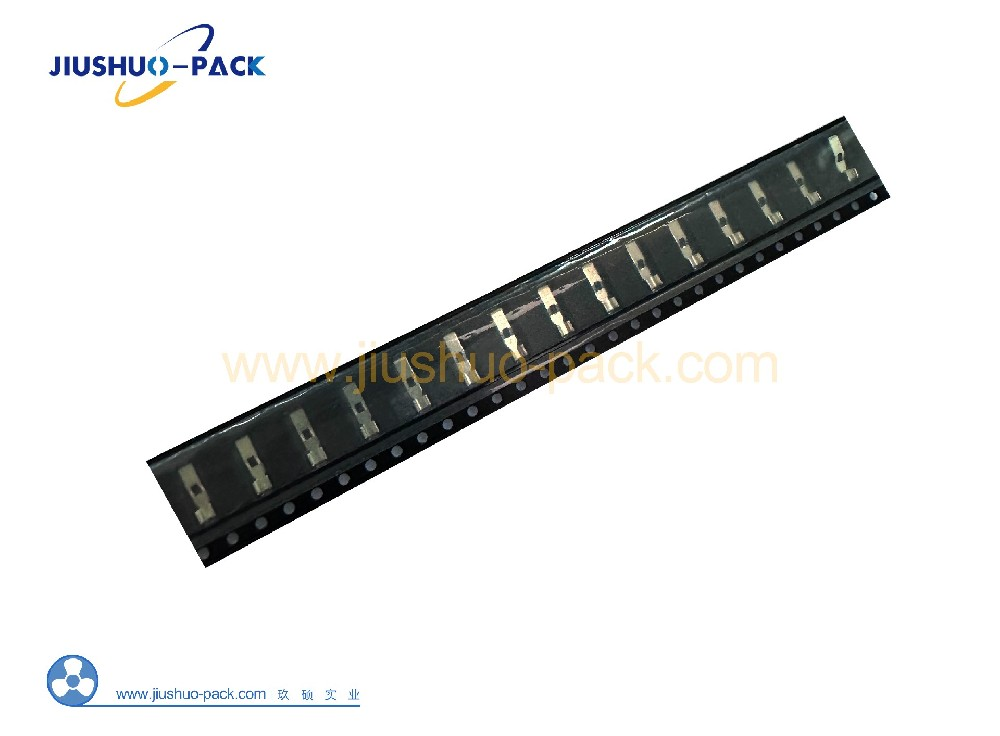

Cover Tape is a specialized tape-based packaging material designed specifically for the electronic component assembly industry. Its primary function is to work in conjunction with Carrier Tape to form a sealed protective structure, thereby ensuring the safety and reliability of electronic components during transportation, storage, and automated assembly processes.
Protection of Electronic Components: The cover tape seals over the pockets of the carrier tape, preventing SMD (Surface Mount Devices)-such as resistors, capacitors, transistors, diodes, ICs, LEDs, and connectors-from contamination, electrostatic damage, or physical impact during transit.
Supports Automated Placement: In SMT (Surface Mount Technology) production lines, pick-and-place machines utilize the carrier tape's sprocket holes to execute precise stepping movements, peeling back the cover tape to retrieve components and mount them onto the PCB.
Adapts to Miniaturization Trends: As component sizes continue to shrink (e.g., 0402, 0603), cover tapes can be customized to accommodate the packaging requirements of ultra-small or irregularly shaped components.
Cover tape is predominantly utilized within the electronic component assembly industry. It functions in tandem with carrier tape to house and secure electronic components-such as resistors, capacitors, transistors, and diodes-within the pockets of the carrier tape. By sealing over these pockets, the cover tape creates a closed packaging system designed to shield the electronic components from contamination and damage during transportation. During the component assembly phase, the cover tape is peeled away; guided by the precise positioning provided by the carrier tape's indexing holes, automated assembly equipment sequentially extracts the components from their respective pockets and mounts them onto the printed circuit board (PCB).