
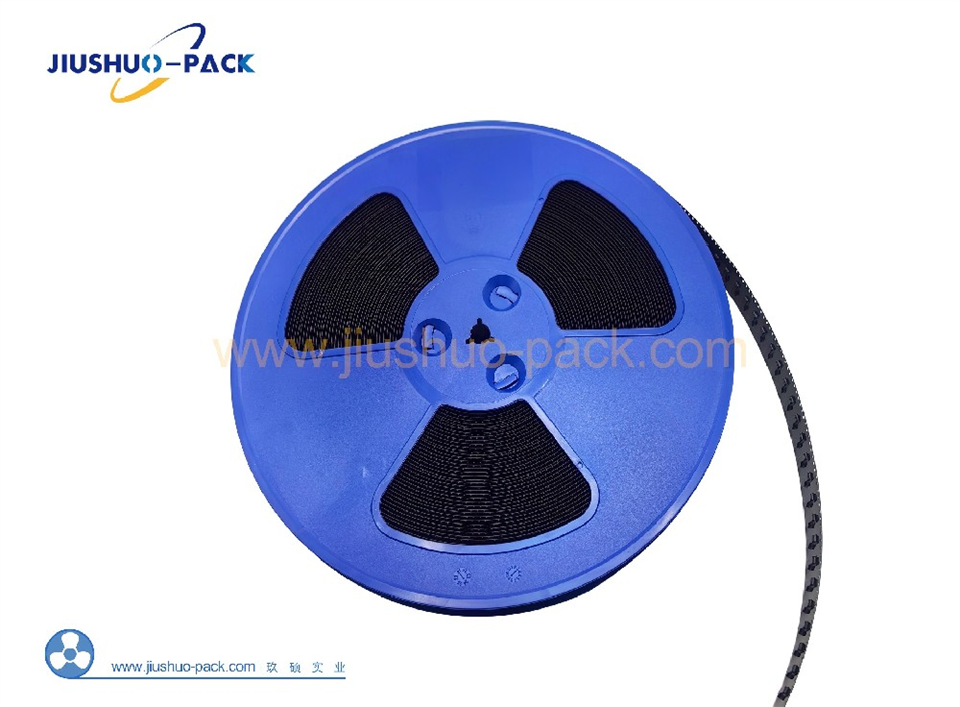
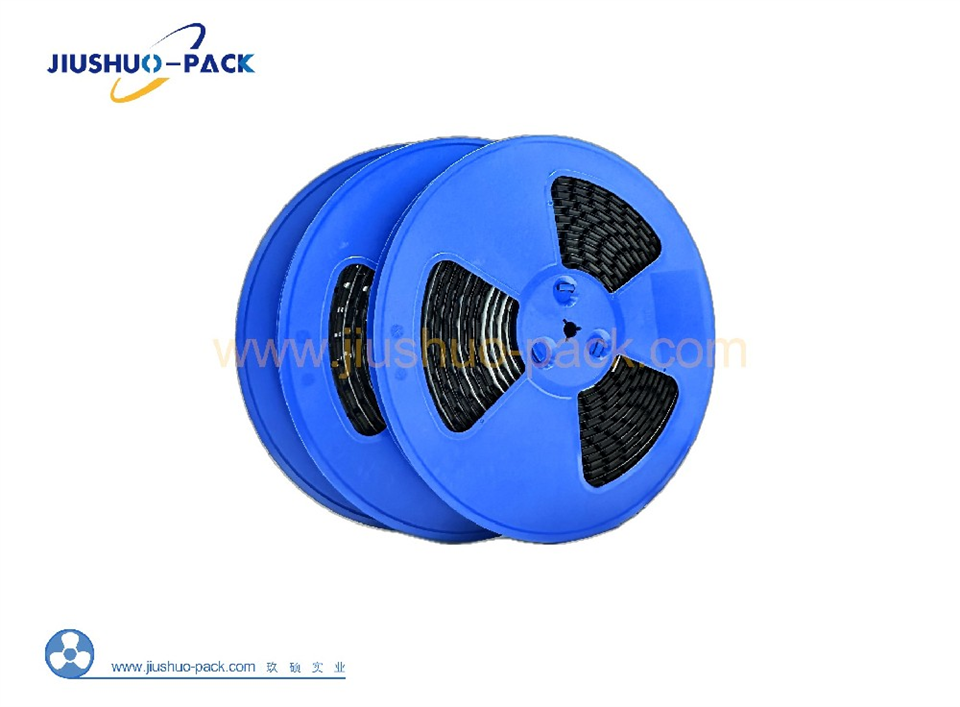
Product Material
- PS anti-static carrier tape is usually made from two kinds of materials: plastic and paper.
- Embossed carrier tape is mainly made of plastic. The most common types are PC, PS and ABS. Some are also made from PET or APET.
- Stamped carrier tape is mostly made of paper or PE composite material.
- PC is strong, stable, heat-resistant and works well with most components.
- PS is not as strong as PC, so it is often combined with ABS into a three-layer sheet to make it stronger.
- PET is similar to PC in strength, but it is less stable in size.
Antistatic Performance
Electronic components such as integrated circuits and semiconductor devices can be sensitive to electrostatic discharge.
Antistatic carrier tape helps reduce the risk of ESD damage by maintaining controlled surface resistance across the material.
The antistatic property allows static charges to dissipate gradually rather than accumulating on the tape surface. This helps protect sensitive electronic devices during:
- packaging
- storage
- transportation
- automated SMT assembly
Typical ESD surface resistance values range from 10⁶ to 10¹¹ Ω depending on the application requirements.
Pocket Structure
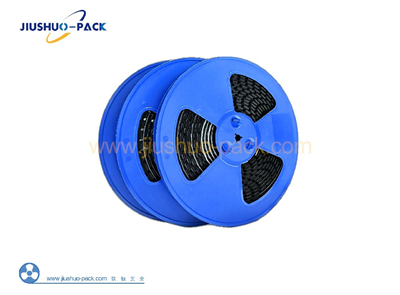
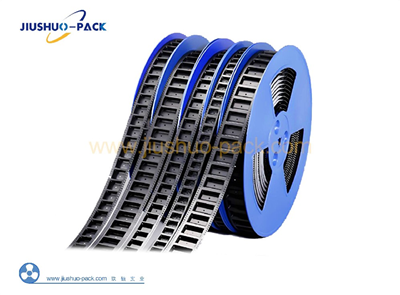
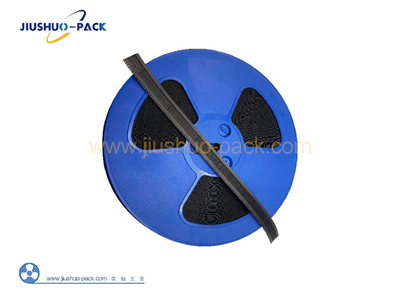
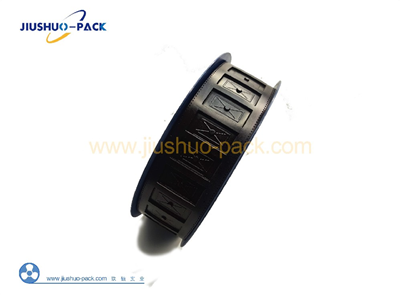
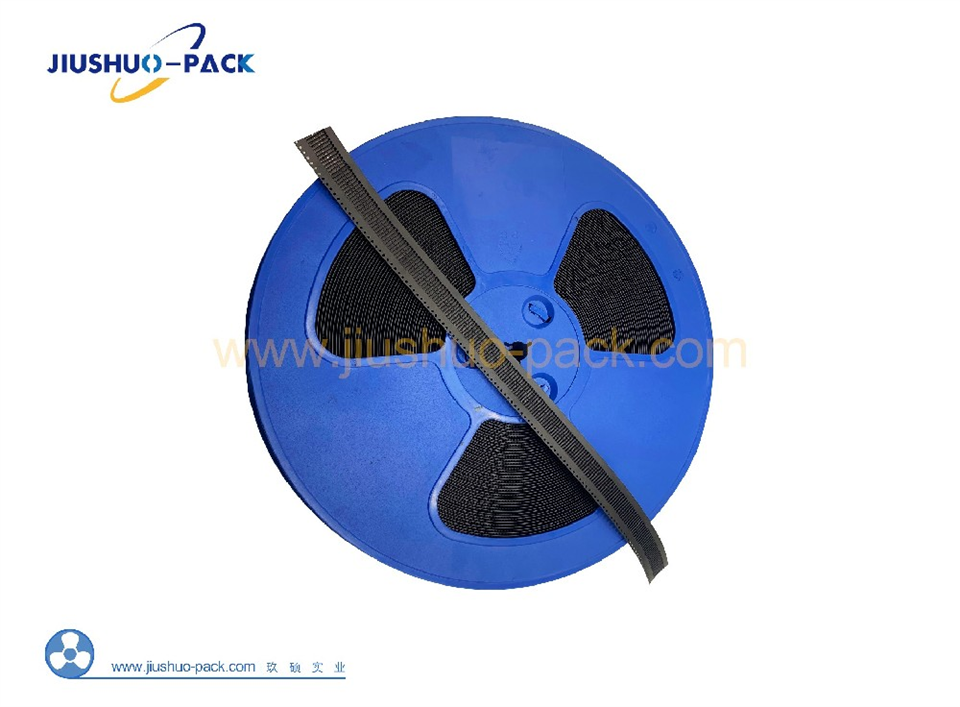
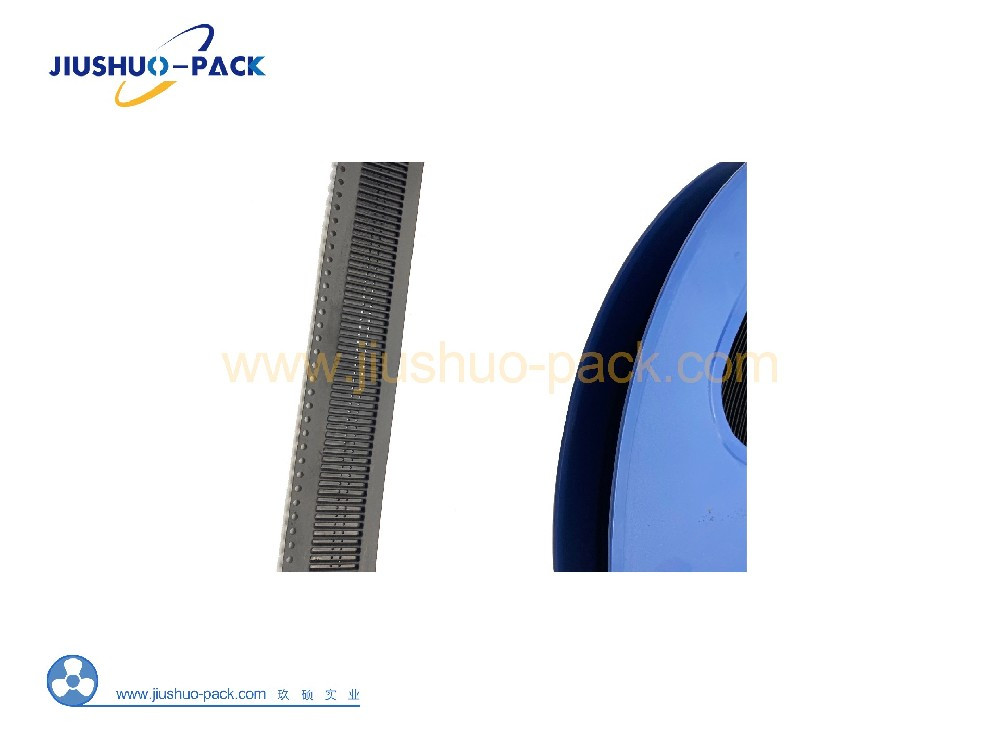
- Antistatic carrier tape contains precisely formed pockets designed according to the size and shape of electronic components.
- These pockets help keep components securely positioned during handling and automated feeding.
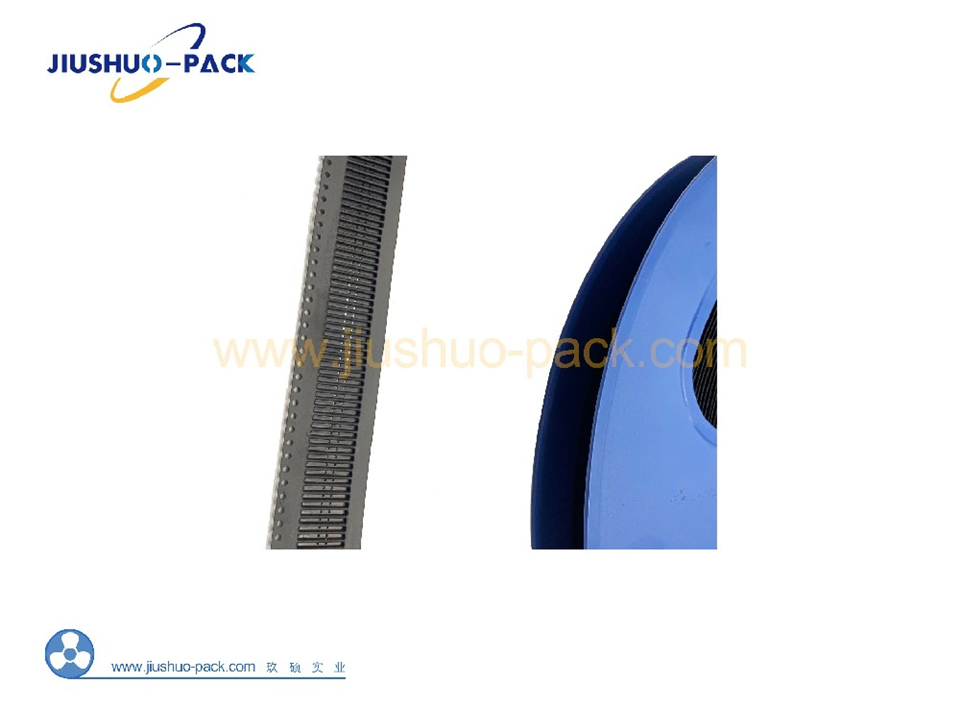
- Standardized sprocket holes along the edges of the tape allow accurate indexing when the tape moves through SMT pick-and-place machines, ensuring stable feeding performance in automated production lines.
Applications
Antistatic carrier tape is widely used in the electronics manufacturing industry for packaging components that require electrostatic protection.
Typical applications include:
- integrated circuits (ICs)
- semiconductor devices
- sensors
- connectors
- SMT electronic components
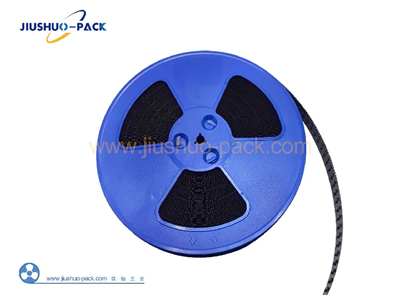
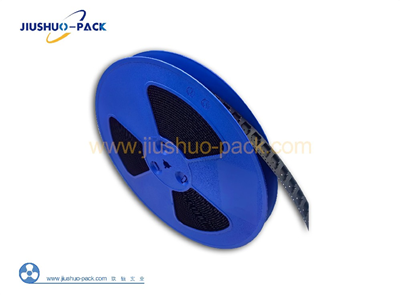
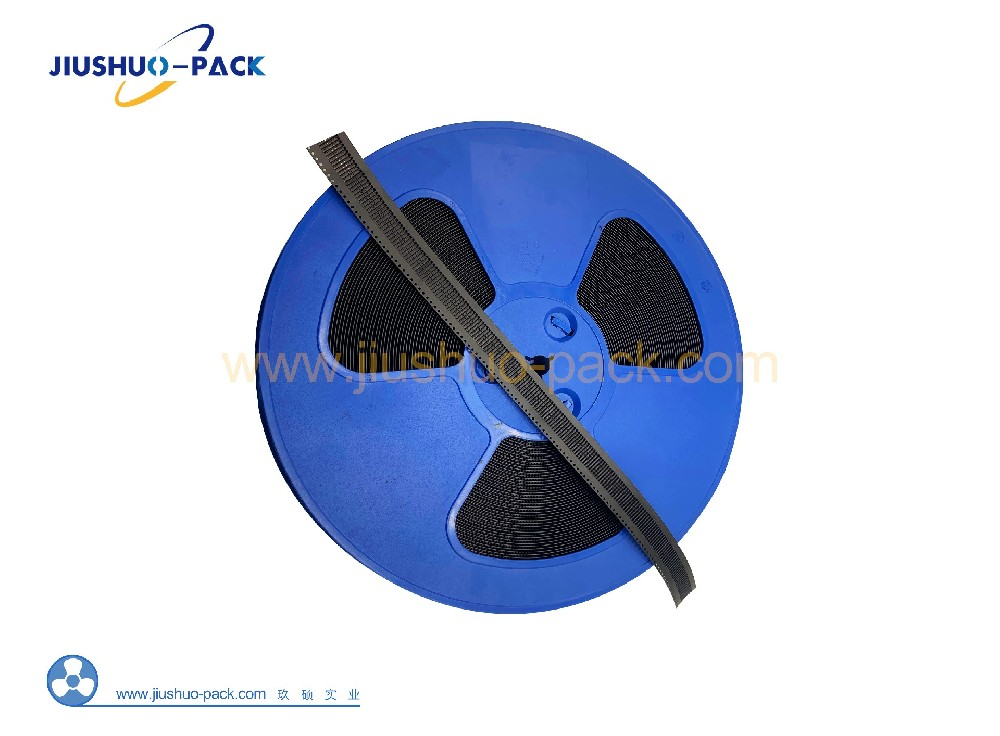
By using tape and reel packaging with antistatic materials, components can be safely handled and automatically fed into SMT pick-and-place machines during PCB assembly.
Specifications
|
Item |
Specification |
|
Material |
PS / PC / PET / ABS |
|
ESD Property |
10⁶ – 10¹¹ Ω |
|
Tape Width |
8 mm – 120 mm |
|
Thickness |
0.25 mm – 1.0 mm |
|
Pocket Depth |
1 mm – 40 mm |
|
Color |
Black / Transparent |
|
Length |
1 – 1000 m per reel |
|
Standard |
EIA-481 / EIA-541 |
Methods to Prevent Static Electricity in Carrier Tape Production
1. Use anti-static materials
- Metals are conductive and may damage components due to high discharge current. Insulating materials easily create static electricity from friction. So metals and pure insulators are not used for anti-static purposes.
- We use static conductive materials and static dissipative materials with controlled surface resistance. A common choice is rubber mixed with conductive carbon black, so the surface resistance stays within a safe range.
2. Static leakage and grounding
- All parts that can build up static electricity must be grounded to provide a safe path for static discharge. We use a dedicated grounding system with buried ground wires.
3. Remove static from conductors
- Static on conductive parts can be removed by connecting them to the ground.
- The voltage should drop safely within 1 second, down to below 100V. This avoids damaging sensitive components caused by fast discharge or high current.
Hot Tags: antistatic carrier tape, China antistatic carrier tape manufacturers, suppliers, factory, Carrier Tape And Reel, carrier tape cover tape, Conductive Carrier Tape And Cover Tape, Electronic Component Carrier Tape, Smt Embossed Carrier Tape and Cover Tape, Thermoformed Carrier Tape