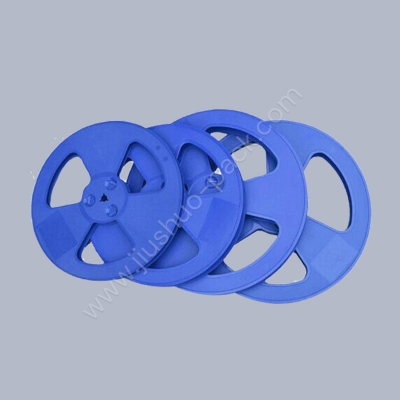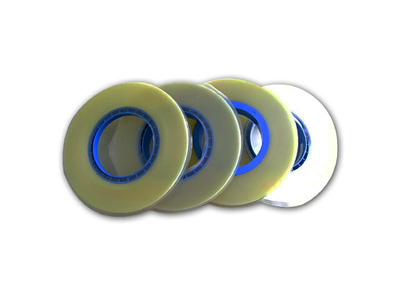

Based on their forming processes, carrier tapes can be classified into two categories: embossed carrier tapes and punched carrier tapes. Embossed carrier tapes are produced by utilizing molds-either through stamping or thermoforming (blister forming)-to locally stretch the carrier tape material, thereby creating recessed cavities. Punched carrier tapes, conversely, are produced by using molds to punch out cavities that are either fully penetrating or semi-penetrating.
The forming steps for plastic carrier tapes typically involve heating the plastic strip (web material); advancing the strip by a fixed distance to the position of the forming mold; raising the forming mold to meet the plastic strip; applying air pressure to force the heated section of the strip to conform tightly against the mold cavities; punching holes using a punching die; and finally, winding the finished tape onto a take-up reel.
The production of paper carrier tapes places extremely high demands on the raw paper stock, which must possess specific characteristics such as minimal thickness variation, resistance to delamination during repeated winding, high surface strength, water and moisture resistance, and strictly controlled chemical composition. Paper carrier tapes typically feature a three-layer (or multi-layer) structure comprising a top layer, a middle layer, and a bottom layer. The top layer must ensure excellent adhesion with the cover tape; the middle layer provides softness and resilience to dampen vibrations; and the bottom layer must ensure structural stiffness as well as adhesion to the bottom sealing tape. Both the papermaking and post-processing stages for these tapes require rigorous material selection, high-precision equipment, and the use of specialized functional chemicals .
For specialized processes-such as automated carrier tape bonding-the production of the carrier tape itself (typically a flexible base tape, such as polyimide film) involves complex procedures. The basic process flow includes fabricating the lead frame (by laminating copper foil onto the base tape and etching out the lead patterns), aligning and placing the semiconductor chips, and performing simultaneous thermal electrode bonding. In terms of structural hierarchy, carrier tapes can be classified into single-layer, double-layer, and triple-layer types; their respective manufacturing processes encompass material selection and design, as well as the specific fabrication techniques tailored to single-layer, double-layer, or triple-layer structures.